Hello! How can we help you?


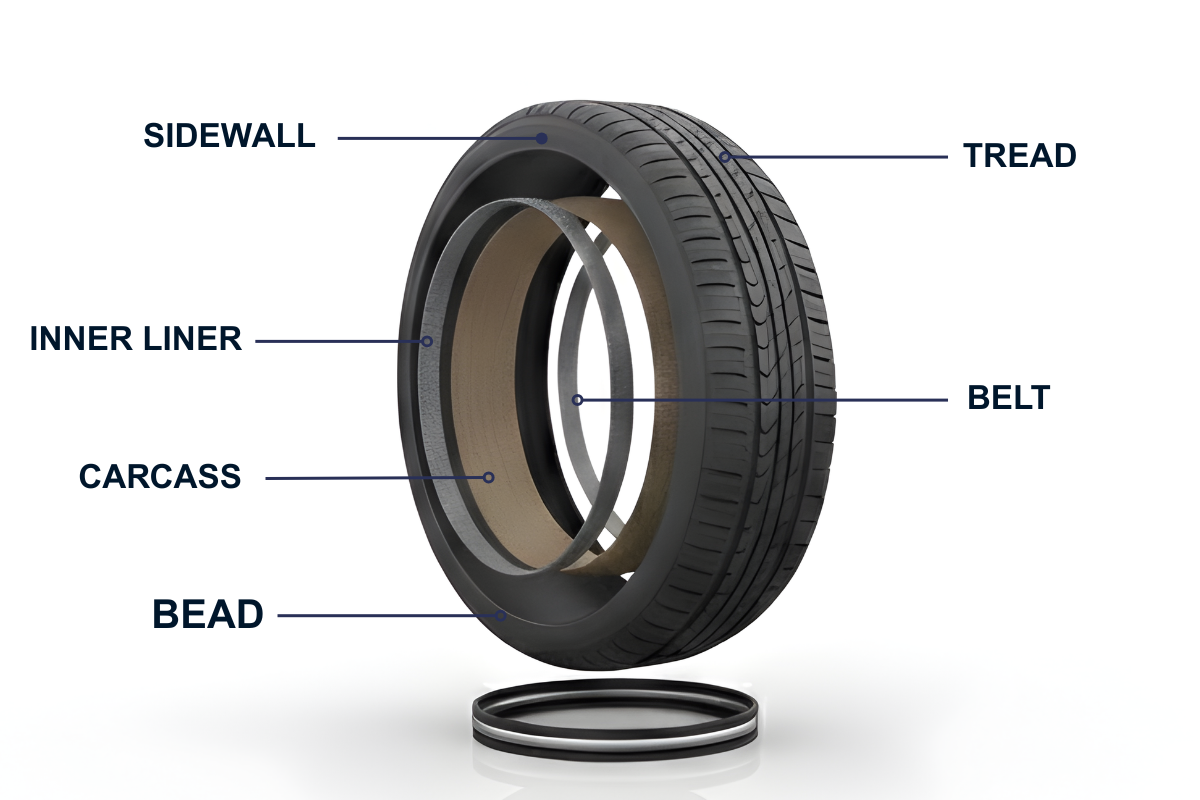
Tires are more than rubber—they are carefully designed to ensure safety, performance, and durability on the road. Each part of a tire plays a critical role:
Primary point of contact on the road, providing traction, heat resistance and water dispersion.
Protects from potential side impacts Provides basic information of the tire such as tire size, load capacity, speed rating and max pressure.
Steel of wires sow to each other, keeping the wheel intact with the tire and maintaining its shape
Steel cords in between the carcass and the tread is used to distribute pressure evenly.
Acts as a the modern day “tube” which prevents air and pressure to disperse from the tire
| FEATURES | Tubeless Tires | Tube Tires |
|---|---|---|
| Construction | INNER LINER maintains shape and hold air pressure | TUBE maintains shape and hold air pressure |
| Valve Installation | DIRECTLY installed to the WHEEL | Directly installed to the TUBE |
| Mounting | DIRECTLY mounted to the WHEEL | Mounted with TUBE and FLAPx |
| Advantages | LONGER TREAD LIFE AND ENHANCED SAFETY FUEL EFFICIENT | MORE AFFORDABLE TRIED AND TESTED EASY TO MAINTAIN |
Composed of texted fiber cords embedded into the rubber Provides the tire flexibility, and strength, allowing it to withstand the pressures of the road.
| FEATURES | BIAS | RADIAL |
|---|---|---|
| Construction | Plies are sown in a criss cross pattern at a 30-40 degree angle to each others | Plies runs in radially from center to out to the edge forming steel belts |
| Application | Suitable for heavy duty and off road
|
Suitable for long distance and daily use
|
| Advantages | Cheap Heavy Load Strong and Flexible | Superior Grip and Traction Stability at High Speeds Longer Tread Life |